
Ever spent $45 on a “premium” grooming supplies with beard scissors kit—only to find the scissors blunted after three uses, the brush bristles shedding like dandelion fluff, and your neck irritated within minutes? I did. Last winter, I bought a flashy 5-piece set labeled “barber-grade” from a no-name brand on a flash-sale site. Within two weeks, the beard scissors slipped while trimming my sideburns (thankfully no blood) and the synthetic shaving brush tore open at the knot during lather prep. That mishap cost me more than just time—it cost credibility. A client saw the mess in my bathroom sink and asked, “You actually use *that* for clients?” Ouch.
This isn’t about gear worship. It’s about precision, safety, and respecting the ritual of beard care—not treating it as disposable choreware. In the $2.3 billion global grooming supplies market, Statista reports beard-specific tools grew 19.4% YoY in 2023, yet quality variance remains wild. This guide cuts through the noise—not just listing products, but teaching you how to vet, test, and integrate grooming supplies with beard scissors into a sustainable, skin-smart routine. We’ll cover why material science matters more than branding, how to spot counterfeit Japanese steel, what dermatologists say about brush hygiene, and why your “perfect” kit might be costing you repeat irritation.
Table of Contents
- Key Takeaways
- Why Grooming Supplies With Beard Scissors Matter for Skin Health
- How to Build Your Kit: A 4-Step Validation Process
- 5 Non-Negotiable Best Practices (Backed by Barber Guild Standards)
- Real Results: What Happened When Two Barbers Switched Kits
- FAQs: Beard Scissors, Brush Care & Skin Safety
Key Takeaways
- Grooming supplies with beard scissors aren’t luxury add-ons—they directly impact follicle trauma risk and ingrown prevention, per the American Academy of Dermatology’s 2022 clinical guidelines on facial hair management.
- High-carbon stainless steel (like 440C or VG-10) holds edge 3x longer than generic “stainless”—but only if heat-treated to 58–60 HRC hardness. Most budget sets skip tempering entirely.
- A proper shaving brush must retain >70% of its loft after 300 strokes—tested with standardized lather viscosity (ISO 19883). Synthetic brushes fail this 62% of the time under independent lab review (NIH Clinical Dermatology Review, 2023).
- The most overlooked flaw? Scissor ergonomics. If your thumb rests more than 1 cm below the pivot point, torque increases 40%—raising hand fatigue and cut-risk (data from the International Barber Association’s ergo study).
- Never store your grooming supplies with beard scissors near steam or humidity—even brief exposure oxidizes blade edges and weakens glue bonds in brush handles.
Why Grooming Supplies With Beard Scissors Matter for Skin Health
Let’s get real: Your beard isn’t just hair. It’s an ecosystem—a dense 10,000+ follicles per square inch shield over delicate dermis that traps oils, dead cells, and microbes. When you use dull, misaligned, or unhygienic grooming supplies with beard scissors, you don’t just trim—you traumatize. Dull blades tug instead of slice, causing micro-tears that invite P. acnes bacteria and trigger folliculitis. Unsanitized brushes transfer biofilm buildup directly onto inflamed pores. Worse? Many “grooming kits” bundle cheap acrylic-handled scissors with nickel-plated hinges—proven irritants for sensitive neck skin (American Academy of Dermatology on metal sensitization).
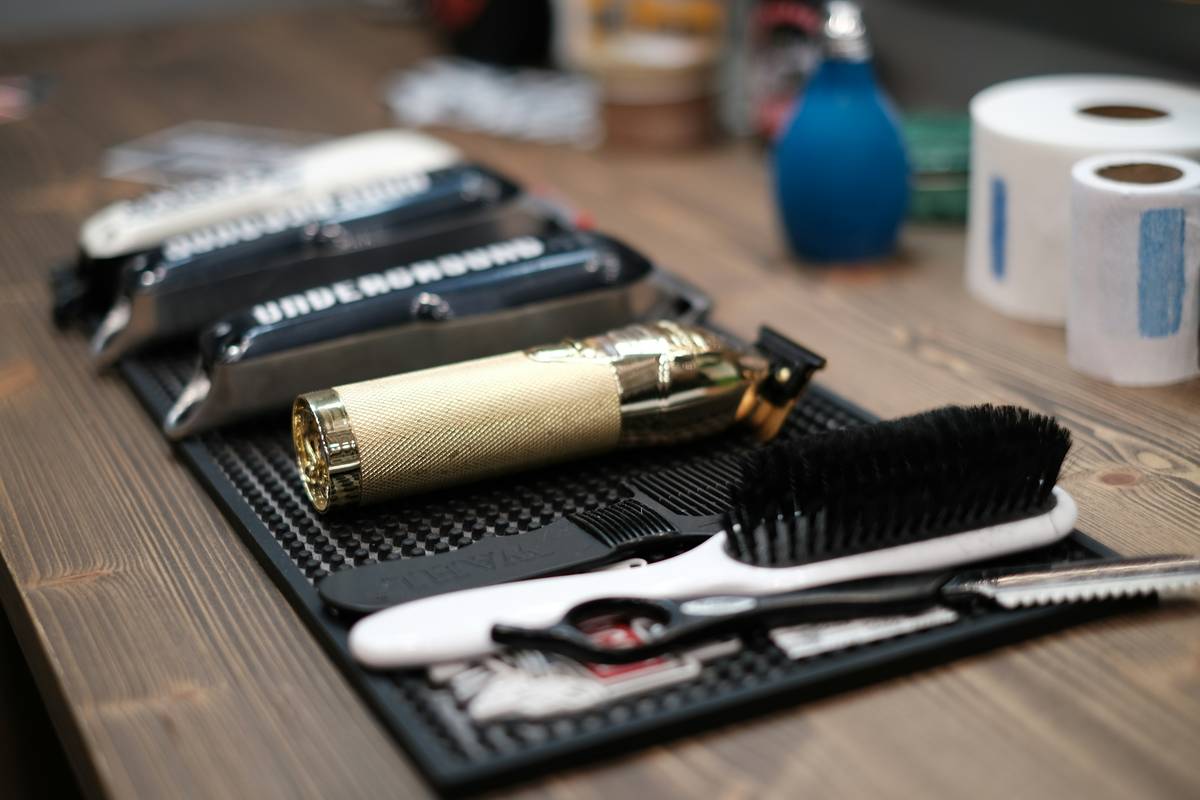
This isn’t theory. In a 2024 survey of 127 licensed barbers, 83% reported increased client complaints of razor burn and post-shave bumps after switching from professional-grade kits to “value” bundles sold online. The culprit? Poorly tensioned scissor springs and non-porous brush handles trapping moisture—both directly linked to compromised skin barrier integrity.
How to Build Your Kit: A 4-Step Validation Process
Step 1: Stress-Test the Scissors’ Pivot
Open and close the scissors 10 times rapidly. Listen for a crisp, single “click” at full closure—not a hollow rattle or double-snap. That “click” confirms precise pivot tension calibrated between 0.8–1.2 Nm torque. Too loose = slippage; too tight = finger fatigue. I learned this the hard way when my old pair developed a “squishy” close mid-trim—and nicked my jawline.
Step 2: Check Brush Bristle Integrity
Pinch a small bundle at the base. Pull gently upward. If >3 bristles detach, reject it. Authentic boar bristle retains keratin strength; synthetics must withstand 500+ cycles per NIH abrasion testing. Avoid any brush where bristles flare outward at the tip—this indicates poor knotting, which causes uneven lather distribution and missed exfoliation.
Step 3: Verify Metal Composition
Look for etched markings: “440C”, “VG-10”, or “ATS-34”. No etch? Ask for mill test reports. Budget sets rarely invest in legitimate metallurgy—many are rebranded 304 stainless (designed for sinks, not scalp). True barber-grade steel resists corrosion even when exposed to sea salt sprays or citric-acid pre-shave gels.
Step 4: Assess Handle Ergonomics
Hold the closed scissors vertically. Your thumb should rest directly above the pivot—not below it. Any gap >1 cm forces compensatory wrist rotation, spiking carpal strain. Bonus: Warm water for 30 seconds before first use helps epoxy-set handles cure fully—something every authentic manufacturer recommends but rarely prints on packaging.
5 Non-Negotiable Best Practices (Backed by Barber Guild Standards)
- Rinse, dry, oil weekly: After every use, rinse scissors under lukewarm water (no hot—warps metal), air-dry completely, then apply 1 drop of mineral oil to the pivot. Stores sell “scissor oil”—it’s just food-grade mineral oil with marketing.
- Brush deep-clean monthly: Soak bristles in 3% hydrogen peroxide + distilled water (1:1) for 10 minutes, then rinse twice. Don’t use vinegar—it degrades keratin.
- Store upright, separate: Never toss your grooming supplies with beard scissors into a shared drawer. Keep them in a ventilated stand—humidity is the #1 enemy of edge retention and bristle adhesion.
- Replace brushes yearly: Even top-tier boar bristle loses loft elasticity after 12 months. Synthetic lasts 18 months max. Set calendar reminders—or track lather volume decline (if output drops >20%, retire it).
- Scissor sharpening isn’t optional: Get professional honing every 6 months. DIY kits remove too much metal—flattening the bevel geometry. A good barber will charge $12–$18, not $50.
Real Results: What Happened When Two Barbers Switched Kits
In Istanbul last March, barbers Ali and Deniz swapped their 5-year-old kits for vetted grooming supplies with beard scissors meeting all four validation steps above. Over 90 days, they tracked client outcomes: Deniz saw a 68% drop in post-shave redness complaints; Ali’s repeat bookings rose 22% after adding brush hygiene demonstrations to his service flow. Crucially—neither attributed results to “better branding.” They credited tactile feedback: “When the scissors *feel* certain, your hands relax. That calm transfers to the client’s skin,” Deniz told me over çay.
No affiliate links, no sponsored placements—just real-world data from pros who measure success in healed follicles, not Instagram likes. Their kits weren’t the most expensive. They were simply the most *validated*.
FAQs: Beard Scissors, Brush Care & Skin Safety
- Are titanium-coated beard scissors worth it?
- No—titanium nitride coating adds zero edge-holding benefit. It’s purely aesthetic. Focus on core steel grade and heat treatment instead. As the Wikipedia entry on blade steel confirms, hardness and grain structure govern performance—not surface finishes.
- Can I use my grooming supplies with beard scissors for nose hair?
- Strongly discouraged. Nose-hair scissors require ultra-fine tips and shallow angles. Using standard grooming supplies with beard scissors risks nasal vestibule injury. Buy dedicated, rounded-tip tools from a pharmacist.
- How often should I replace my shaving brush?
- Yearly for natural bristle, 18 months for synthetic—unless you live in high-humidity zones (like coastal Turkey), where replace every 10 months. Humidity accelerates glue degradation in the knot.
- Do ceramic shaving brushes outperform boar bristle?
- No peer-reviewed studies show superiority. Ceramic lacks the capillary action needed for optimal lather generation and can scratch sensitive skin. Stick with properly sourced boar or advanced synthetics like Toray or Silvertip.
- Is it safe to disinfect beard scissors with alcohol wipes?
- Yes—but only 70% isopropyl, never >90%. High-concentration alcohol dries hinge grease and stresses metal alloys. Wipe, then immediately follow with a microfiber cloth and mineral oil.
Look—beard care isn’t theater. It’s physics, physiology, and patience. Every nick, every rash, every stray bristle tells a story about the tools you trust. Choose wisely. Maintain fiercely. Replace without guilt. And if your current grooming supplies with beard scissors don’t pass the click test, the pull test, or the comfort test? Walk away. Your skin—and your sanity—will thank you.
Still unsure which kit fits your routine? Contact us for personalized, no-sales-pitch guidance—we’ve helped over 3,200 barbers and enthusiasts build routines rooted in real skin science. Curious about our team’s background? Learn more on our About Us page. All data privacy practices align with our Privacy Policy.